Part 2 of 2 | Understanding environmental changes, the eMASS reporting process, and the three-year certification cycle.
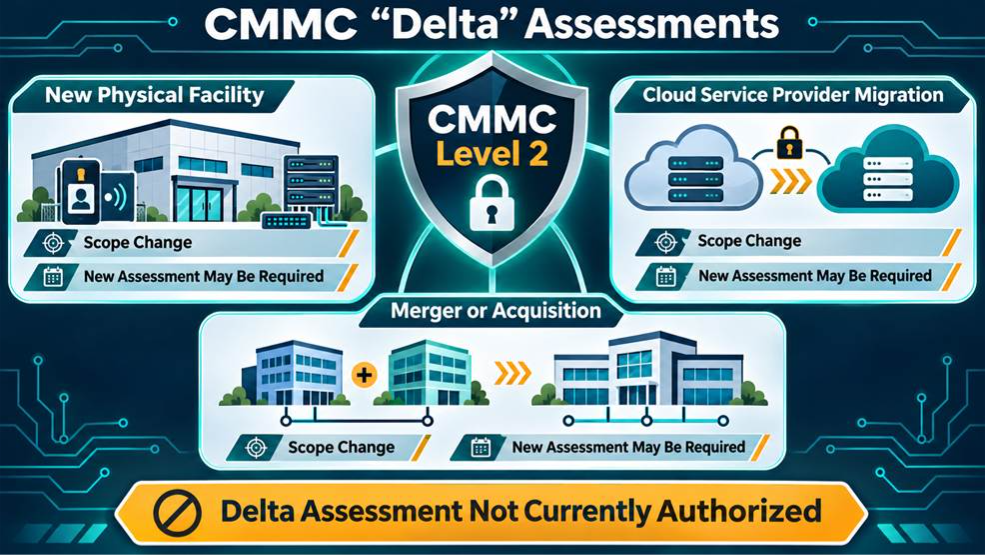
Figure 1. Why partial certification assessments are not currently authorized
In the first article of this series, we examined the October 2024 CMMC final rule and the Department of Defense’s discussion of changes to an organization’s assessment scope.
The DoD distinguishes between routine operational changes within an existing CMMC Assessment Scope and significant architectural or boundary changes that require a new assessment.
We also discussed the role of NIST SP 800-171 Revision 2 requirements 3.12.1 and 3.12.3 in validating the continued effectiveness of security controls.
But what happens when an organization makes a significant change shortly after completing its CMMC assessment?
Consider a defense contractor that receives CMMC Level 2 certification and, only a few months later, opens another facility, migrates its CUI environment to a different Cloud Service Provider (CSP), or acquires another company.
Depending on how these changes affect the previously assessed environment, another CMMC assessment may be necessary.
These situations are among the reasons organizations discuss the possibility of “Delta” assessments, sometimes called differential assessments.
A hypothetical “Delta” assessment would concentrate on changes made since the previous evaluation while potentially carrying forward findings for requirements that remain unaffected.
The concept raises reasonable questions about assessment scheduling, costs, and the use of previously established findings.
However, there are several important reasons why this approach cannot currently be used as a substitute for a CMMC Level 2 certification assessment.
When Business Changes Affect a Certified Environment
The October 2024 CMMC final rule specifically discusses changes that affect previously assessed environments.
Its preamble, under “Reassessment” at 89 FR 83135–83136, distinguishes routine operational changes from significant architectural or boundary changes.
The distinction applies to both self-assessments and certification assessments.
Three common business scenarios illustrate how this can become relevant.
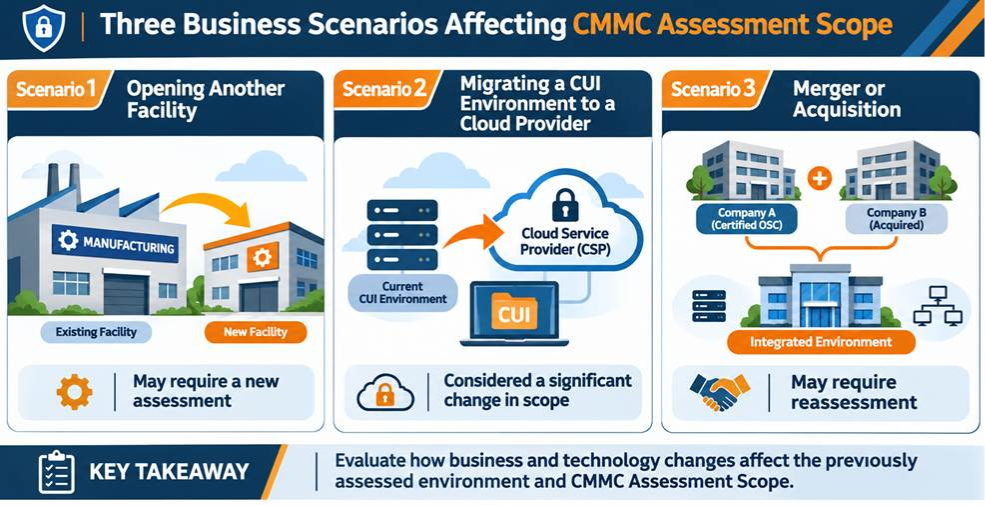
Figure 2. Opening another facility, migrating an entire CUI environment, and integrating an acquisition may affect assessment scope differently.
Scenario 1: Opening Another Facility
An Organization Seeking Certification (OSC) successfully completes its CMMC Level 2 certification assessment.
Six months later, it opens an additional manufacturing facility that will process Controlled Unclassified Information (CUI).
The organization plans to use its existing security policies, procedures, and information systems at the new location.
However, the new facility may introduce additional CUI Assets, Security Protection Assets, physical security mechanisms, network connections, or other components that were not included in the original assessment.
The organization must determine whether the expansion materially changes the previously assessed scope.
The addition of a new business location may not automatically require a new assessment, depending on how the location affects the organization’s CMMC Assessment Scope.
However, where the expansion constitutes a significant architectural or boundary change, a new assessment is required.
Scenario 2: Migrating to Another Cloud Provider
Consider an OSC that successfully completes its CMMC Level 2 certification assessment and subsequently decides to migrate its entire CUI environment to a different Cloud Service Provider (CSP).
At first glance, the migration might appear to be a technology change. The organization may continue using similar applications, maintain the same security policies, and perform the same business functions.
However, migrating an entire CUI environment to another CSP involves considerably more than replacing one technology with another.
The new cloud environment may introduce substantially different technical security mechanisms, administrative responsibilities, and operational processes.
Identity and access management, encryption, audit logging, boundary protection, configuration management, incident response, backup and recovery, and other security functions may be implemented differently.
The migration may also change how these responsibilities are distributed between the OSC, the CSP, and any Managed Service Provider (MSP) supporting the environment.
For example, security functions previously managed directly by the OSC might become the responsibility of the new CSP or MSP. Conversely, the organization may inherit additional responsibilities that were previously performed by another provider.
These differences may affect how numerous CMMC security requirements are satisfied, even when the organization’s written policies remain largely unchanged.
Under 32 CFR § 170.19, the use of external service providers, including CSPs, must be considered when establishing the CMMC Assessment Scope. The applicable services, relationships, and security responsibilities must also be appropriately documented, including through the System Security Plan (SSP) and Customer Responsibility Matrix (CRM).
Where a CSP processes, stores, or transmits CUI, the applicable FedRAMP Moderate or equivalent requirements must also be satisfied.
In this scenario, the migration represents a significant architectural and assessment-scope change because the organization is replacing or substantially modifying numerous security mechanisms and the allocation of responsibility for their implementation.
The significance arises not simply from changing cloud technologies, but from introducing a substantially different combination of technical, administrative, and operational controls supporting the protection of CUI.
Accordingly, the organization must address the change as a significant modification to its previously assessed environment, requiring a new CMMC assessment under the current program requirements.
This determination should be supported by a documented security impact analysis and review of the revised assessment scope, with the Affirming Official retaining responsibility for the organization’s continued compliance.
A limited change involving a cloud service would not necessarily have the same implications. The assessment consequences depend on the actual changes to the security architecture, implementation responsibilities, and previously assessed scope.
However, the comprehensive CSP migration described here is not equivalent to a routine operational change within an otherwise unchanged environment.
The current CMMC Program does not authorize a C3PAO to assess only the newly introduced cloud components and issue a new certification through a “Delta” assessment.
Scenario 3: Mergers and Acquisitions
A recently certified contractor acquires another company and intends to integrate its networks, information systems, and CUI-processing activities.
The acquired company may operate different technologies, security procedures, and network architectures.
Integration can introduce new security dependencies and change the previously assessed environment.
The DoD specifically identifies mergers and acquisitions as examples of significant changes that may require reassessment.
The actual implications depend on whether the systems were previously assessed, how they are integrated, and whether the resulting environment maintains the applicable security requirements.
A merger does not automatically invalidate an organization’s existing CMMC Status. The determining issue is how the transaction affects the assessment scope and continued compliance.
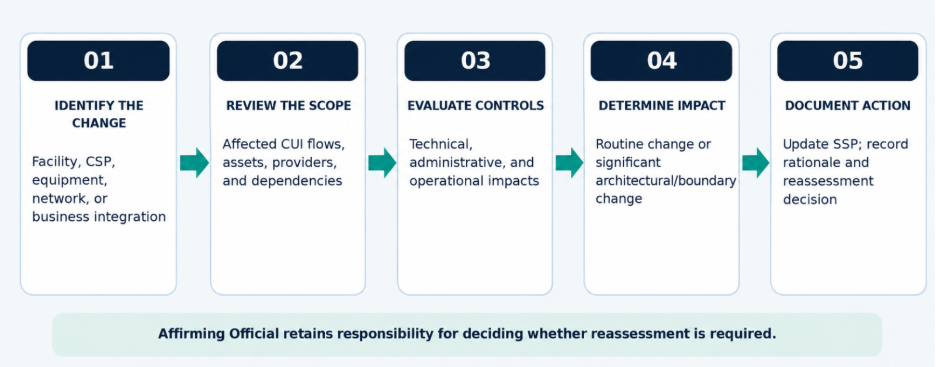
Figure 3. Organizations should evaluate how business and technology changes affect the previously assessed scope and document their decisions.
Why Can’t a C3PAO Simply Conduct a “Delta” Assessment?
The answer involves more than the absence of a procedure specifically named “Delta” assessment.
The current CMMC Program establishes how certification assessments are performed, how their results are recorded, and how certification status is determined.
These requirements are interconnected.
1. The Regulations Require Comprehensive Assessment Results
Under 32 CFR § 170.17(a)(1), an OSC must complete the applicable Level 2 certification assessment requirements to obtain CMMC Status.
CMMC Level 2 evaluates the 110 security requirements from NIST SP 800-171 Revision 2, which contain 320 assessment objectives.
The regulation requires the C3PAO to submit the certification assessment results into the CMMC instance of the Enterprise Mission Assurance Support Service (eMASS).
Section 170.17(a)(1)(i)(H) specifically requires the assessment result for each requirement objective.
The regulation does not establish an alternative reporting method through which a C3PAO can omit selected objectives because they were previously evaluated.
The Cyber AB’s CMMC Assessment Process (CAP), Version 2.0, likewise establishes procedures for assessing the applicable requirements, conducting quality assurance, and reporting the results.
Although the CAP allows representative evidence sampling, this is different from excluding security requirements from the assessment.
A C3PAO may select representative evidence to determine whether a requirement is MET.
It cannot independently establish a new certification methodology that carries forward previous findings without conducting the required evaluation.
2. eMASS and SPRS Follow a Defined Reporting Process
CMMC certification assessment results are submitted through the CMMC implementation of eMASS.
The reporting process requires assessment identification information, the applicable CMMC Assessment Scope, assessment findings, and other required data.
The current reporting methodology is designed around a complete Level 2 assessment result set, rather than a partial reassessment of selected requirements.
Once the C3PAO submits the qualifying assessment results, eMASS calculates the applicable CMMC Status and automatically transmits the status information to the Supplier Performance Risk System (SPRS).
SPRS serves as the authoritative repository for the organization’s CMMC Status.
Importantly, the C3PAO does not independently create a partial certification record in SPRS.
The published requirements do not establish a mechanism for submitting a new certification assessment containing only a subset of the 110 requirements and combining those findings with selected results from an earlier certification.
This is a significant distinction.
A hypothetical “Delta” assessment might evaluate 20 security requirements while relying on previous findings for the remaining 90.
However, the current certification reporting process requires results addressing the applicable assessment objectives. It does not authorize those 90 requirements to be treated as newly assessed simply because their earlier findings were satisfactory.
The CMMC eMASS assessment data standard and import templates implement the prescribed reporting workflow. The detailed validation rules of the restricted application are not publicly available for independent verification.
Accordingly, the established regulatory and reporting requirements provide the authoritative basis for concluding that a partial “Delta” assessment cannot be submitted as a new CMMC Level 2 certification assessment.
3. The Certificate Represents the Assessed Information System
Another consideration involves what the CMMC certificate actually represents.
Under 32 CFR § 170.9, the C3PAO issues a Certificate of CMMC Status that identifies the OSC, the associated CAGE codes, the assessment identifier, the CMMC level, and the CMMC Status Date.
The CAP further requires the certificate to include a description of the assessed information system and a statement of conformity to NIST SP 800-171 Revision 2.
The certificate is not intended to represent satisfactory implementation of only a selected group of security requirements.
It communicates the CMMC Status established through the assessment of the defined information system and its applicable security requirements.
This distinction becomes particularly important when considering how an unauthorized partial reassessment might affect the certification validity period.
How the CMMC Status Date Is Established
Under 32 CFR § 170.4, the CMMC Status Date is established when the assessment status results are submitted to SPRS or the CMMC instance of eMASS, as applicable.
For a Level 2 certification assessment, the C3PAO submits the results to eMASS.
The DoD’s February 2025 presentation, Introduction to the CMMC Enterprise Mission Assurance Support Service, explains that eMASS generates the assessment identifier, CMMC Status Date, and status expiration date when qualifying results are uploaded.
For a Final CMMC Status, the expiration period is three years.
The Cyber AB CAP requires the C3PAO to obtain the status information from eMASS and use it when generating the Certificate of CMMC Status.
The certificate therefore reflects the status associated with the submitted certification assessment results.
There is an important exception.
When an OSC receives Conditional CMMC Status and successfully completes an authorized POA&M closeout assessment, the original Conditional CMMC Status Date remains in effect.
The closeout does not restart the three-year certification period.
This demonstrates why the date associated with certification status is important to understanding the assessment lifecycle.
The Potential Six-Year Assessment Gap
The relationship between certification dates and previously assessed requirements presents one of the most important considerations involving hypothetical “Delta” assessments.
Consider the following example.
An OSC successfully completes a comprehensive CMMC Level 2 certification assessment and receives a CMMC Status Date of January 2, 2027.
All applicable security requirements are evaluated, and the organization receives a certification status with a three-year validity period.
Using an expiration convention in which the certification ends one day before the third anniversary of its status date, the original certification period ends on January 1, 2030.
Now imagine that the CMMC Program permitted a hypothetical “Delta” certification assessment.
The organization completes that assessment on January 1, 2030, the last day of its original certification period.
During the assessment, only 20 of the 110 security requirements are evaluated.
The remaining 90 requirements are carried forward based on their earlier satisfactory findings.
Suppose the hypothetical process permits those partial results to establish a new CMMC Status Date of January 1, 2030, beginning another three-year certification period.
Under the same expiration convention, the organization’s renewed certification would remain valid through December 31, 2032.
But what happened to the 90 requirements that were not reassessed?
Those requirements may have last been independently evaluated during the original January 2027 assessment.
By December 31, 2032, those requirements could have gone nearly six years without another independent C3PAO evaluation.
The organization would still be responsible for maintaining compliance, performing applicable periodic assessments, conducting ongoing monitoring, and completing annual affirmations.
However, those activities are different from independent certification assessment of the applicable requirements.
This is the distinction that makes the age of historical findings important.
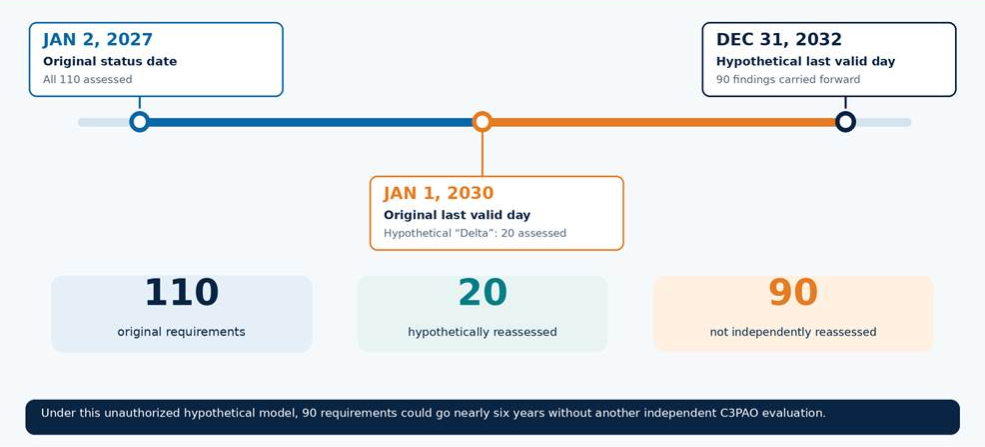
Figure 4. Hypothetical assessment timeline: January 2, 2027 original status, January 1, 2030 partial review, December 31, 2032 end date. This is not an authorized process.
This example illustrates a potential consequence of an unauthorized renewal model. It does not describe a process currently permitted by CMMC. The illustrative expiration dates use the convention that the certification’s last valid day precedes the third anniversary of its CMMC Status Date.
Why Evidence Validity Matters
The six-year example identifies an issue that any future differential assessment methodology would need to address.
A certification may have a recent status date while some supporting findings originate from a substantially earlier assessment.
To support a new certification decision, a differential methodology would need to establish how previous findings remain valid.
This could involve defined evidence-reuse criteria, ongoing monitoring requirements, independent validation, limits on the age of findings, and conditions requiring particular requirements to be reassessed.
Such a process would also need to account for the possibility that changes to one component affect other previously assessed security requirements.
Without established rules governing these considerations, a recent assessment date would not necessarily indicate that all applicable requirements had been independently evaluated within the new certification period.
The current CMMC methodology establishes comprehensive certification assessments within the three-year cycle, complemented by annual affirmations and the obligation to maintain compliance.
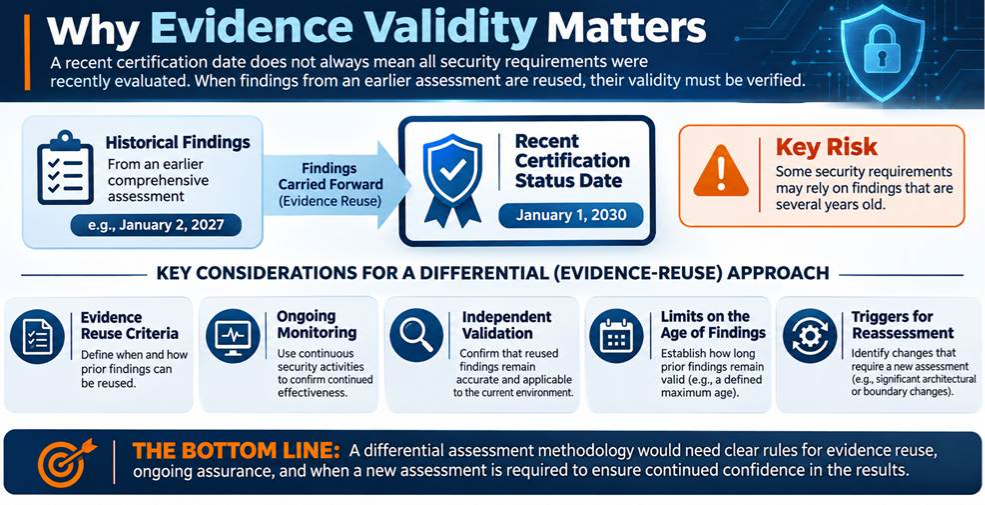
Figure 5. Optional supporting figure: Historical evidence reuse requires validation, monitoring, age limits, and reassessment triggers within an authorized methodology.
How Does FedRAMP Address Continued Security Assurance?
The Federal Risk and Authorization Management Program (FedRAMP) offers a useful comparison because its authorization lifecycle incorporates continuous monitoring.
FedRAMP establishes recurring security monitoring, vulnerability management, security assessment activities, documentation updates, and significant-change evaluation processes.
Its November 2025 Continuous Monitoring Playbook also describes circumstances in which qualifying results from an out-of-cycle significant-change assessment may be reused during the applicable annual assessment.
Such reuse occurs under defined conditions and with appropriate supporting records.
The significance of this comparison is that reuse of assessment evidence takes place within an established methodology.
FedRAMP does not automatically provide authority for CMMC assessment procedures.
However, it illustrates how an assessment program can formally incorporate continuous monitoring and controlled reuse of assessment findings when its governing requirements provide for those activities.
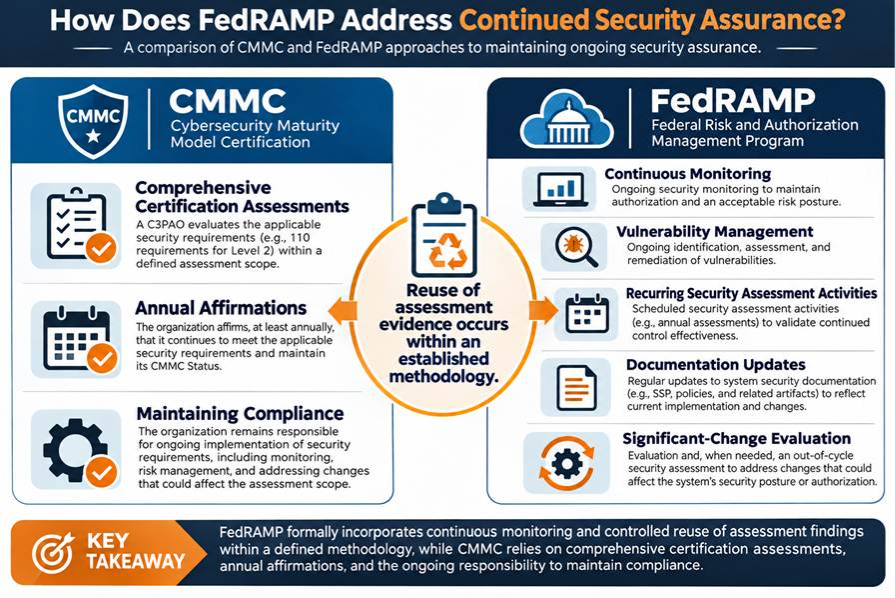
Figure 6. Optional supporting figure: FedRAMP and CMMC establish different assurance and assessment methodologies.
Could “Delta” Assessments Be Authorized in the Future?
The concept raises considerations that could be examined within future program discussions.
A differential methodology might offer operational benefits when organizations undergo significant changes shortly after completing a comprehensive assessment.
Potential advantages could include more focused assessment activity, reduced preparation time, and different approaches to scheduling assessments following major changes.
However, establishing such a methodology would require formal program authorization and corresponding assessment procedures.
These procedures would need to address assessment scope, evidence reuse, validity of historical findings, reporting requirements, certification dates, and quality assurance.
They would also need to establish whether a differential assessment could renew certification or whether comprehensive assessments would remain necessary at defined intervals.
A formal differential model could potentially use additional monitoring and evidence-validation activities to support confidence in previously assessed requirements.
These are possible considerations for a future assessment framework, not authorized alternatives under the current CMMC Program.
What Can Organizations Do Today?
Although a “Delta” assessment cannot replace a required certification assessment, targeted internal reviews remain useful for evaluating changes.
Organizations can use these reviews to determine how new facilities, cloud migrations, acquisitions, or technology changes affect their security requirements and assessment scope.
NIST SP 800-171 Revision 2 requirements 3.12.1 and 3.12.3 provide an important basis for assessing and monitoring the continued effectiveness of security controls.
Configuration management, security impact analysis, risk assessment, and SSP maintenance also contribute to evaluating changes.
These activities support the organization’s obligation to maintain compliance between assessments.
They can also assist the Affirming Official in evaluating whether a change requires reassessment under the applicable CMMC rules.
Understanding the Difference
The CMMC Program establishes a consistent methodology for evaluating an organization’s implementation of the applicable security requirements.
The DoD has also addressed how operational changes and significant architectural or boundary changes affect previously assessed environments.
The current certification and reporting processes are structured around the results of a Level 2 assessment covering the applicable security requirements within a defined scope.
Those results establish a CMMC Status Date and support a Certificate of CMMC Status.
A hypothetical “Delta” assessment that evaluates only selected requirements introduces additional considerations regarding reporting, evidence validity, and the three-year certification period.
These considerations would need to be addressed through an authorized methodology before differential certification assessments could become part of the program.
For now, the distinction remains clear.
“Delta” reviews can support continued compliance and help organizations evaluate changes. “Delta” assessments are not an authorized substitute for comprehensive CMMC Level 2 certification assessments.
Until the DoD formally establishes an alternative methodology, OSCs and C3PAOs must follow 32 CFR Part 170 and the applicable Cyber AB CMMC Assessment Process.
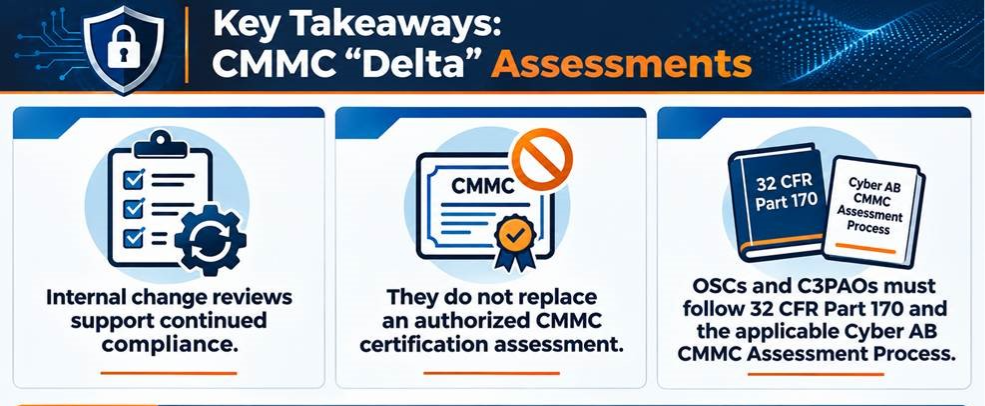
Figure 7. Internal change reviews help maintain compliance but do not replace an authorized CMMC certification assessment.
References
1. 32 CFR § 170.4 — Acronyms and Definitions, particularly the definitions of CMMC Status and CMMC Status Date.
2. 32 CFR § 170.9 — CMMC Third-Party Assessment Organizations, particularly paragraphs (b)(17) and (b)(18).
3. 32 CFR § 170.17 — CMMC Level 2 Certification Assessment and Affirmation Requirements, particularly paragraphs (a)(1) and (c)(1).
4. 32 CFR § 170.19 — CMMC Scoping and External Service Providers, particularly paragraph (c)(2).
6. The Cyber AB. CMMC Assessment Process, Version 2.0, particularly Activities 3.17–3.22 and 4.1–4.4.
7. DoD CIO. Introduction to the CMMC Enterprise Mission Assurance Support Service (February 2025).
8. DoD CMMC Frequently Asked Questions, May 2026, Question C-Q12.